Pelvic floor physiotherapy is becoming more widely recognized, but many people still are not sure what it means, who it is for, or when they should consider booking an appointment. For some, the term may feel unfamiliar or even a little uncomfortable. For others, it may come up after pregnancy, surgery, pelvic pain, bladder changes, or ongoing core weakness that does not seem to improve with general exercise alone.
At its core, pelvic floor physiotherapy is a specialized area of physiotherapy that focuses on the muscles, joints, nerves, movement patterns, and daily functions connected to the pelvis. Just as a physiotherapist may help someone recover from a shoulder injury, knee pain, back strain, or sports-related issue, a pelvic health physiotherapist can help assess and treat concerns involving the pelvic floor and surrounding areas.
The pelvic floor is a group of muscles at the base of the pelvis. These muscles help support the bladder, bowel, uterus or prostate, assist with continence, contribute to sexual function, and work closely with the deep core, hips, lower back, and breathing system. When these muscles are too weak, too tight, poorly coordinated, or not functioning well with the rest of the body, symptoms can show up in ways that affect comfort, confidence, and everyday life.
Did you know? At Breathe Wellness in Smithville, our physiotherapy team offers compassionate, patient-centred care for pelvic health, orthopedic, and musculoskeletal concerns. If you are dealing with pelvic pain, bladder changes, pregnancy or postpartum recovery, core weakness, or ongoing discomfort, physiotherapy may help you feel more supported in your recovery journey.
How Pelvic Floor Physiotherapy Fits Within Physiotherapy
Pelvic floor physiotherapy is not separate from physiotherapy. It is a focused area within the physiotherapy profession.
Physiotherapy is often associated with injuries, pain, mobility, strength, and rehabilitation. Pelvic health care fits within that same framework because the pelvic floor is part of the body’s movement and support system. The pelvic floor does not work alone. It connects with the hips, spine, abdominal wall, diaphragm, posture, breathing, and daily movement habits.
For example, someone with pelvic pain may also have hip tension, low back discomfort, difficulty relaxing certain muscles, or changes in how they move. Someone recovering after pregnancy may have pelvic floor weakness, abdominal separation, core instability, or pressure symptoms. Someone with bladder leakage may not simply need “more Kegels” — they may need a proper assessment to understand whether the issue is weakness, tension, coordination, breathing mechanics, or another contributing factor.
This is why pelvic floor physiotherapy can be so helpful. It looks beyond one symptom and considers how the body is functioning as a whole.
What Can Pelvic Floor Physiotherapy Help With?
Pelvic floor physiotherapy may support a wide range of concerns. Some people seek care after a specific life event, such as pregnancy, childbirth, pelvic surgery, or menopause. Others come in because they have been living with symptoms for months or years and are ready to better understand what is happening.
Common reasons someone may consider pelvic floor physiotherapy include:
- Urinary leakage when coughing, laughing, sneezing, running, jumping, or lifting
- A sudden or frequent urge to urinate
- Difficulty fully emptying the bladder
- Pelvic heaviness or pressure
- Pelvic organ prolapse symptoms
- Pelvic pain or genital pain
- Pain with intercourse
- Pregnancy-related pelvic, hip, or low back pain
- Postpartum recovery concerns
- C-section or perineal scar discomfort
- Core weakness or difficulty returning to exercise
- Diastasis recti, sometimes called abdominal separation
- Tailbone pain
- Chronic hip, low back, or groin discomfort that may have a pelvic floor connection
Not every symptom means there is a serious problem, but symptoms that interfere with daily life are worth discussing. Pelvic floor concerns are common, but they should not be dismissed as something people simply have to live with.
Pelvic Floor Physio Is Not Just for Postpartum Recovery
Pregnancy and postpartum recovery are common reasons people hear about pelvic floor physiotherapy, but pelvic health care is broader than that.
Pelvic floor physiotherapy can be helpful before, during, and after pregnancy. During pregnancy, the body changes quickly. The pelvis, hips, back, abdominal wall, and pelvic floor all adapt to increased load, hormonal changes, and shifting posture. Physiotherapy may help with pain management, movement strategies, pelvic support, breathing, and preparation for birth and recovery.
After birth, pelvic floor physiotherapy can help support healing, restore strength, improve coordination, and guide a safe return to exercise. This can be valuable whether someone has had a vaginal birth or C-section. Even when delivery goes smoothly, the body still benefits from thoughtful rehabilitation.
However, pelvic health concerns can also affect people who have never been pregnant. Bladder issues, pelvic pain, painful intercourse, constipation-related straining, post-surgical recovery, athletic pelvic floor dysfunction, and chronic hip or back pain can all have a pelvic floor component. Pelvic floor physiotherapy is about function, comfort, and quality of life — not just childbirth recovery.
What About Kegels?
Many people assume pelvic floor physiotherapy means being told to do Kegels. In reality, pelvic floor care is much more individualized.
Kegels are pelvic floor contractions. They can be useful for some people, especially when weakness is part of the issue. But they are not the right answer for everyone. In some cases, the pelvic floor muscles may already be overactive, tense, guarded, or unable to relax properly. For those individuals, doing more strengthening exercises without proper assessment may not improve symptoms and may even increase discomfort.
A pelvic health physiotherapist can assess how the muscles are functioning and create a plan that may include strengthening, relaxation, breathing, mobility, posture, coordination, manual therapy, education, or functional retraining. The goal is not simply to make the pelvic floor stronger. The goal is to help it work properly with the rest of the body.
What to Expect From Pelvic Floor Physiotherapy
One of the biggest barriers to pelvic floor physiotherapy is uncertainty. People may feel embarrassed, nervous, or unsure what the appointment involves.
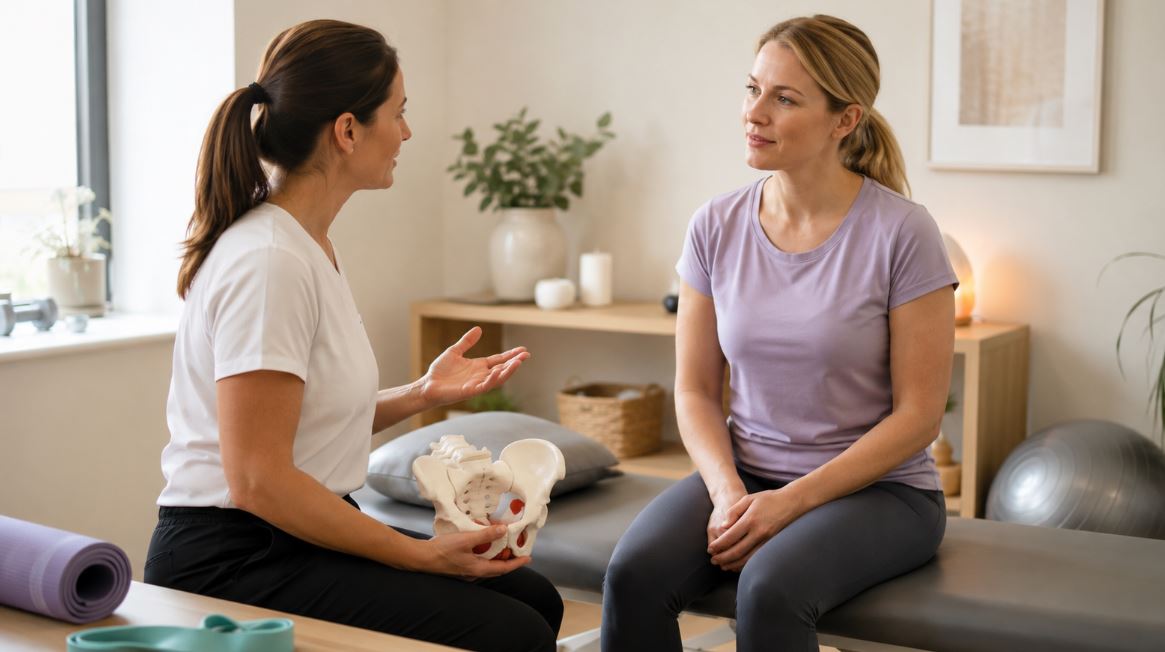
A pelvic health physiotherapy appointment typically begins with a detailed conversation. Your physiotherapist may ask about your symptoms, health history, pregnancy or birth history if relevant, bladder and bowel habits, pain, activity level, exercise goals, and how symptoms are affecting your daily life. This discussion helps guide the assessment and treatment plan.
The physical assessment may include looking at posture, breathing, hip and back mobility, core function, movement patterns, and muscle control. Depending on your symptoms and comfort level, pelvic floor assessment may also be discussed. Informed consent, comfort, privacy, and patient choice are central. You should always feel able to ask questions, pause, or decline any part of an assessment.
Treatment may include education, exercises, hands-on techniques, breathing and relaxation work, core retraining, bladder habit strategies, movement modifications, and a home program. The plan should be specific to your body, your symptoms, and your goals.
When Should You Consider Booking an Appointment?
It may be time to consider pelvic floor physiotherapy if you are experiencing symptoms that are affecting your comfort, confidence, or ability to do the things you enjoy.
For example, leaking urine during exercise is common, but it is not something you have to ignore. Feeling pelvic heaviness after standing, lifting, or activity may be a sign that your pelvic support system needs attention. Pain during intimacy, ongoing pelvic discomfort, or difficulty returning to exercise after pregnancy are also good reasons to seek professional support.
You do not need to wait until symptoms are severe. In many cases, early education and treatment can help prevent small issues from becoming more frustrating over time.
Pelvic floor physiotherapy may also be helpful if you simply want guidance. New mothers, active adults, people returning to fitness, and those recovering from surgery may benefit from learning how to move, strengthen, breathe, and rebuild safely.
A Supportive, Respectful Approach to Care
Pelvic health concerns can feel personal. That is why a compassionate and respectful approach matters.
Good pelvic floor physiotherapy should never feel rushed, dismissive, or one-size-fits-all. It should create space for questions, concerns, and honest conversation. Whether someone is dealing with bladder leakage, pelvic pain, postpartum changes, or uncertainty about core recovery, the goal is to help them feel heard, informed, and supported.
Pelvic floor physiotherapy is ultimately about helping people reconnect with their body, improve function, and move through daily life with more comfort and confidence. For many patients, simply understanding what is happening can be a powerful first step.
Feeling Better Starts With Understanding Your Body
Pelvic floor symptoms can be frustrating, but they are also treatable in many cases. Physiotherapy can help identify what may be contributing to your symptoms and provide a plan that supports recovery in a safe, personalized way.
If you have been wondering whether pelvic floor physiotherapy is right for you, consider speaking with a registered physiotherapist with experience in pelvic health. A thoughtful assessment can help you better understand your body, your options, and the next steps toward feeling more comfortable and confident.
Facebook post:
Pelvic floor physiotherapy can support more than postpartum recovery. It may help with bladder leaks, pelvic pain, core weakness, pregnancy recovery, hip or back discomfort, and more. Our latest article explains what pelvic floor physiotherapy is, who it may help, and when to consider booking an appointment.
#PelvicFloorPhysio #Physiotherapy #PelvicHealth #PostpartumRecovery #SmithvilleOntario #NiagaraWellness #BreatheWellness